
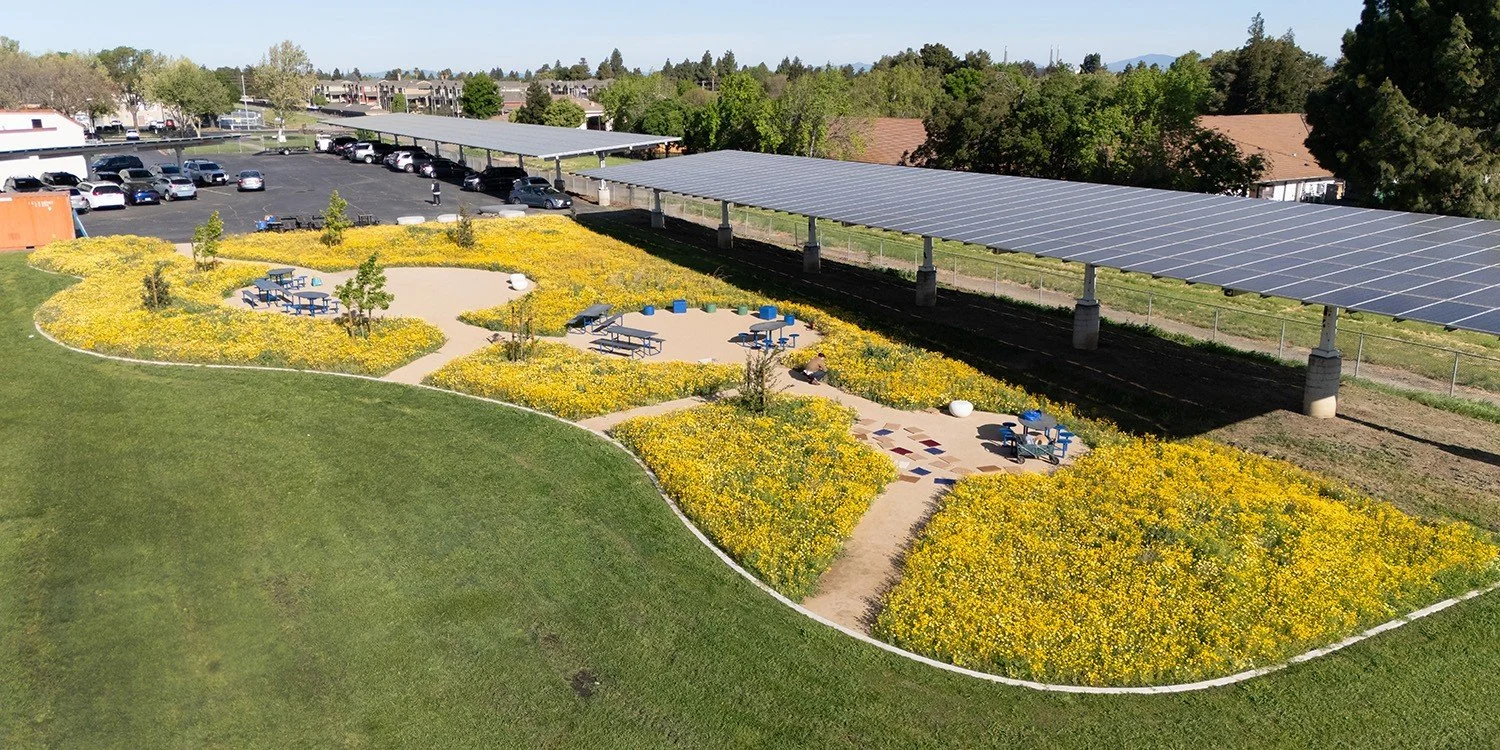
Stoneman Elementary School Outdoor Improvements, Pittsburg Unified School District Green Schoolyards Project
Pittsburg, CA
Designing a Climate-Responsive Landscape for Learning
Stoneman Elementary School is the first completed campus in the Pittsburg Unified School District’s Green Schoolyards Project, a CalFire-funded initiative to transform underutilized, heat-intensive school grounds into more resilient, nature-based environments. Serving a student population where the majority come from disadvantaged backgrounds, the project expands access to outdoor learning while addressing heat island conditions and shade equity.
Gates Studio, selected as landscape architect for all eight campuses, led community outreach, design, and implementation in collaboration with Derivi Castellanos Architects and the Sonoma Ecology Center. At Stoneman, improvements are focused within targeted areas of the existing play yard, where expanses of blacktop and underutilized lawn were replaced with gathering spaces, outdoor classrooms, and pollinator-focused planting that supports both play and curriculum-based learning.
This project was completed in 2026.
Design Features
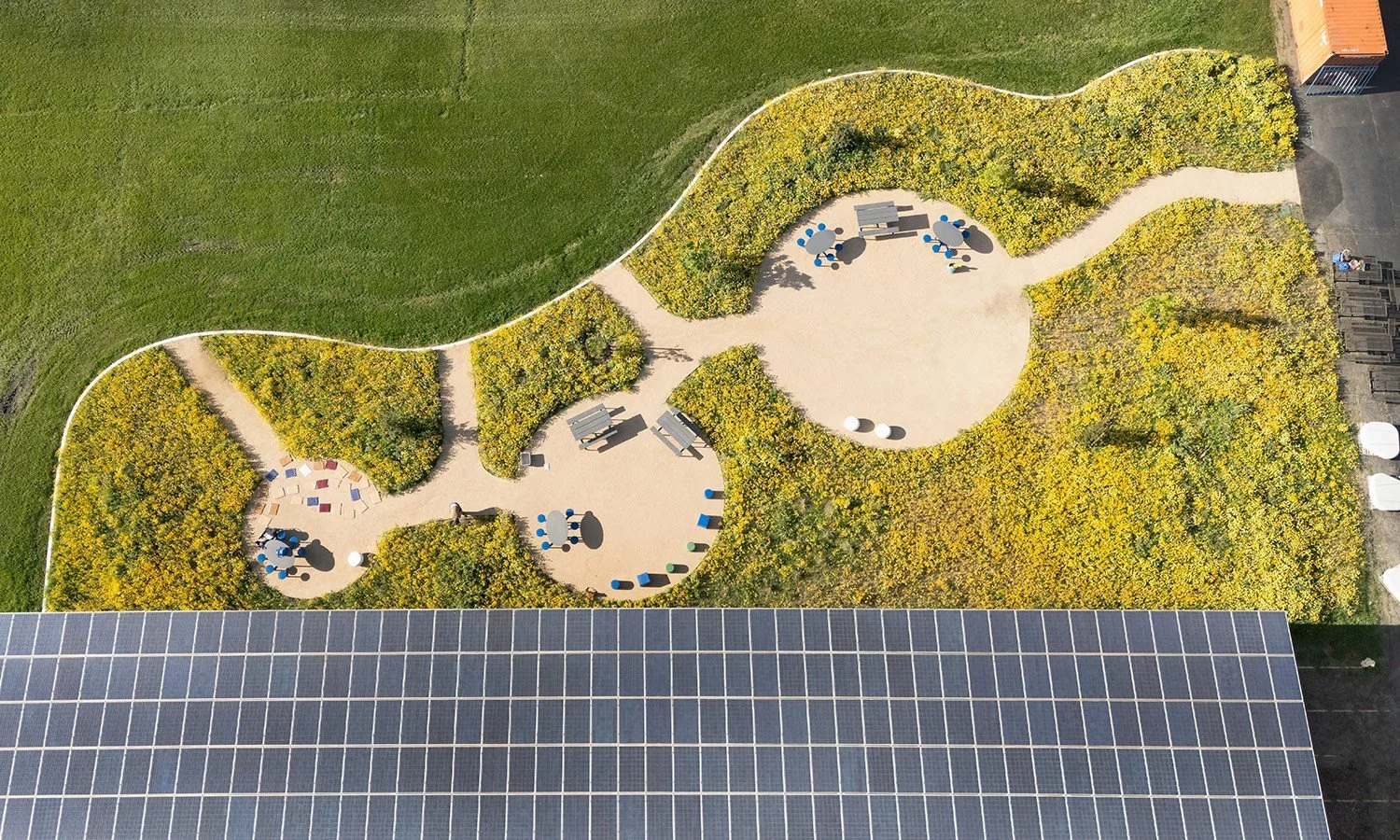
Gates Studio’s design organizes the project’s targeted site improvements through a series of interconnected outdoor spaces, combining shade, habitat, and flexible areas for learning and social use.
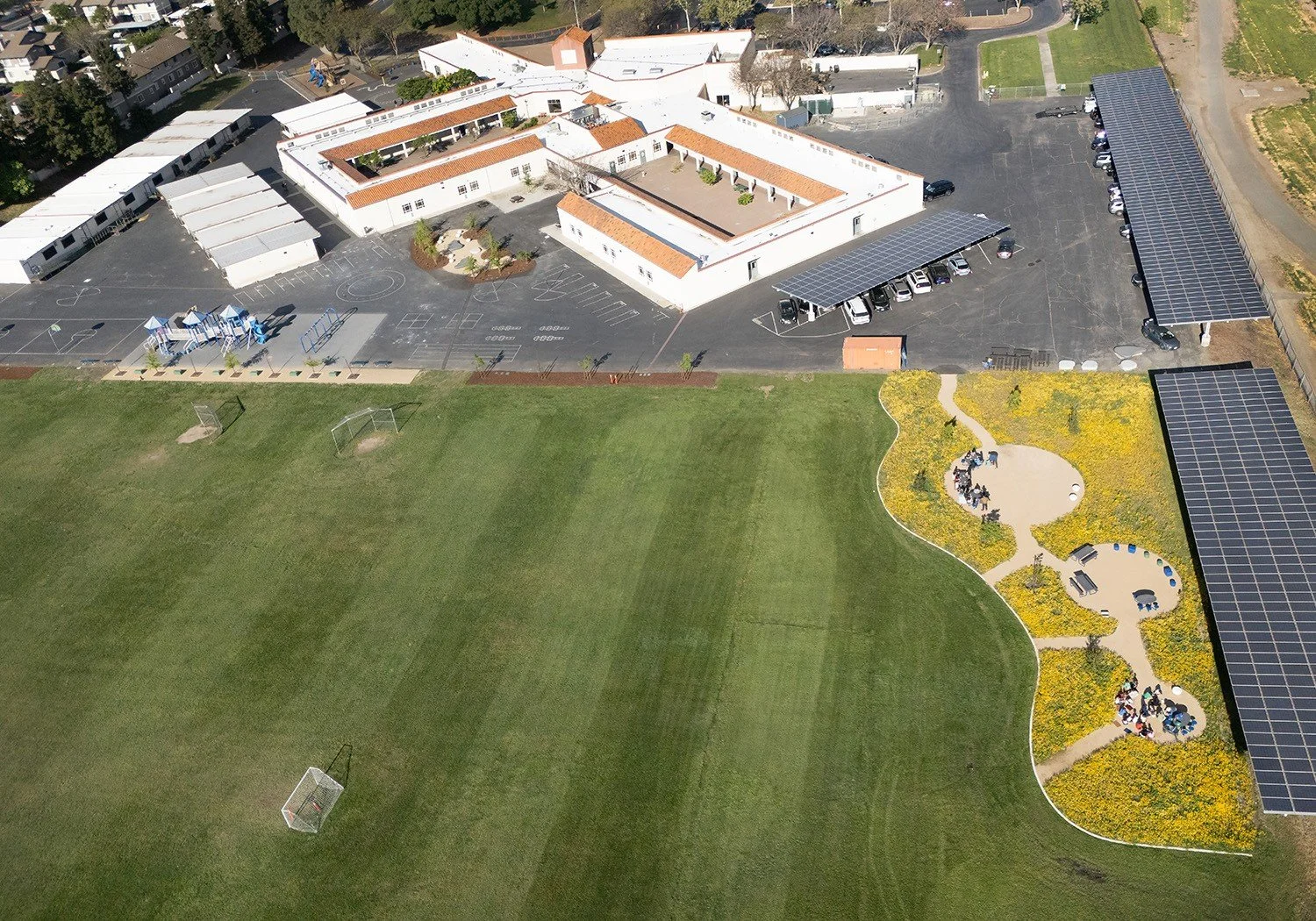
Meandering paths weave through dense wildflower plantings and newly established shade trees, creating settings for both structured and informal activity.
Outdoor classrooms are embedded within these systems, allowing students to engage directly with seasonal change and habitat.
Low-impact development strategies, including soil amendment with biochar and climate-adapted planting, support long-term performance and site resilience.
The completed project demonstrates how climate-responsive landscape design can reshape the schoolyard as an active, ecologically grounded environment for learning and play.
Project Details
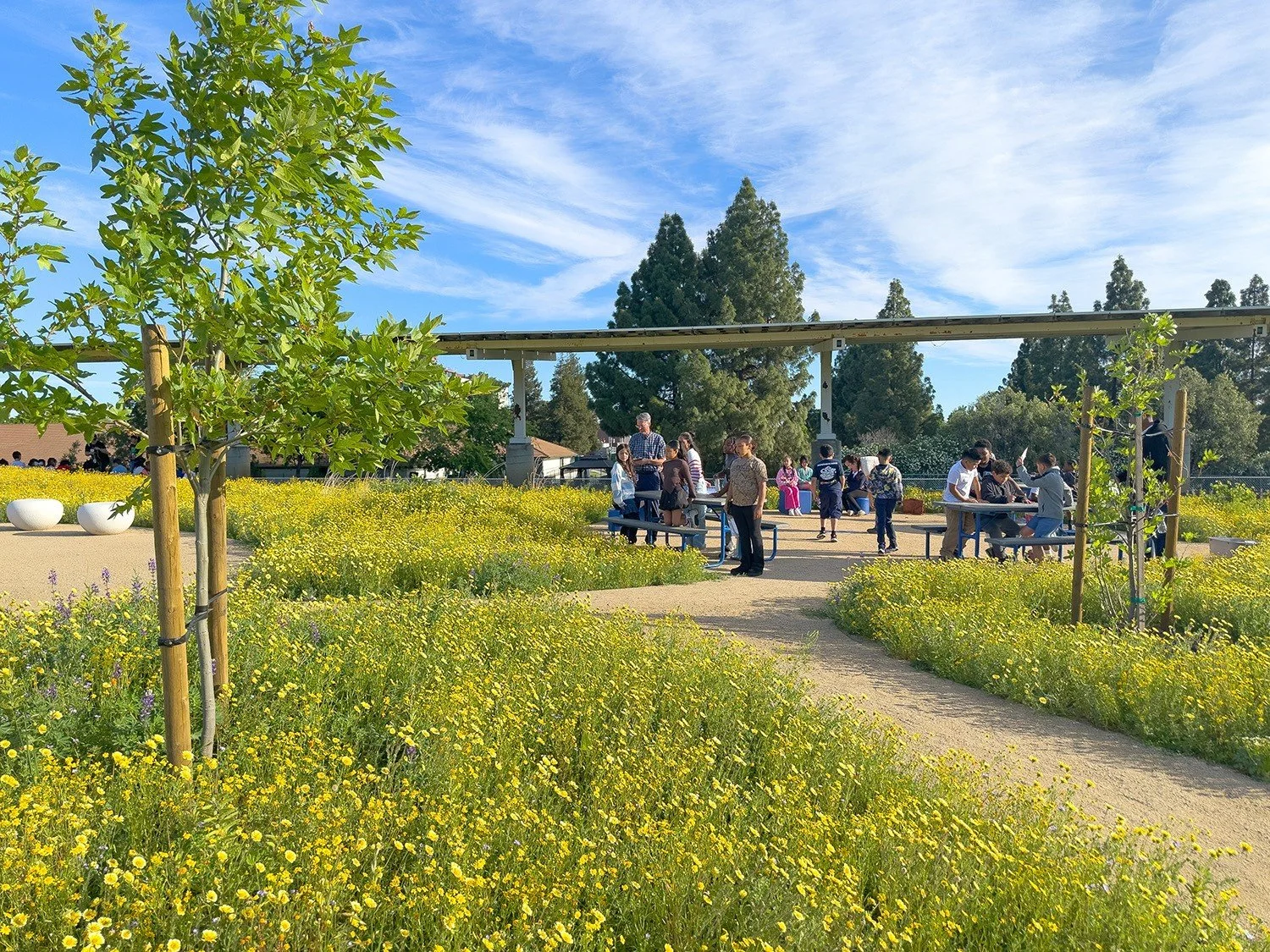
Outdoor classroom areas feature picnic tables, pebble seating, shade trees, and native planting, creating a climate-responsive space for instruction.
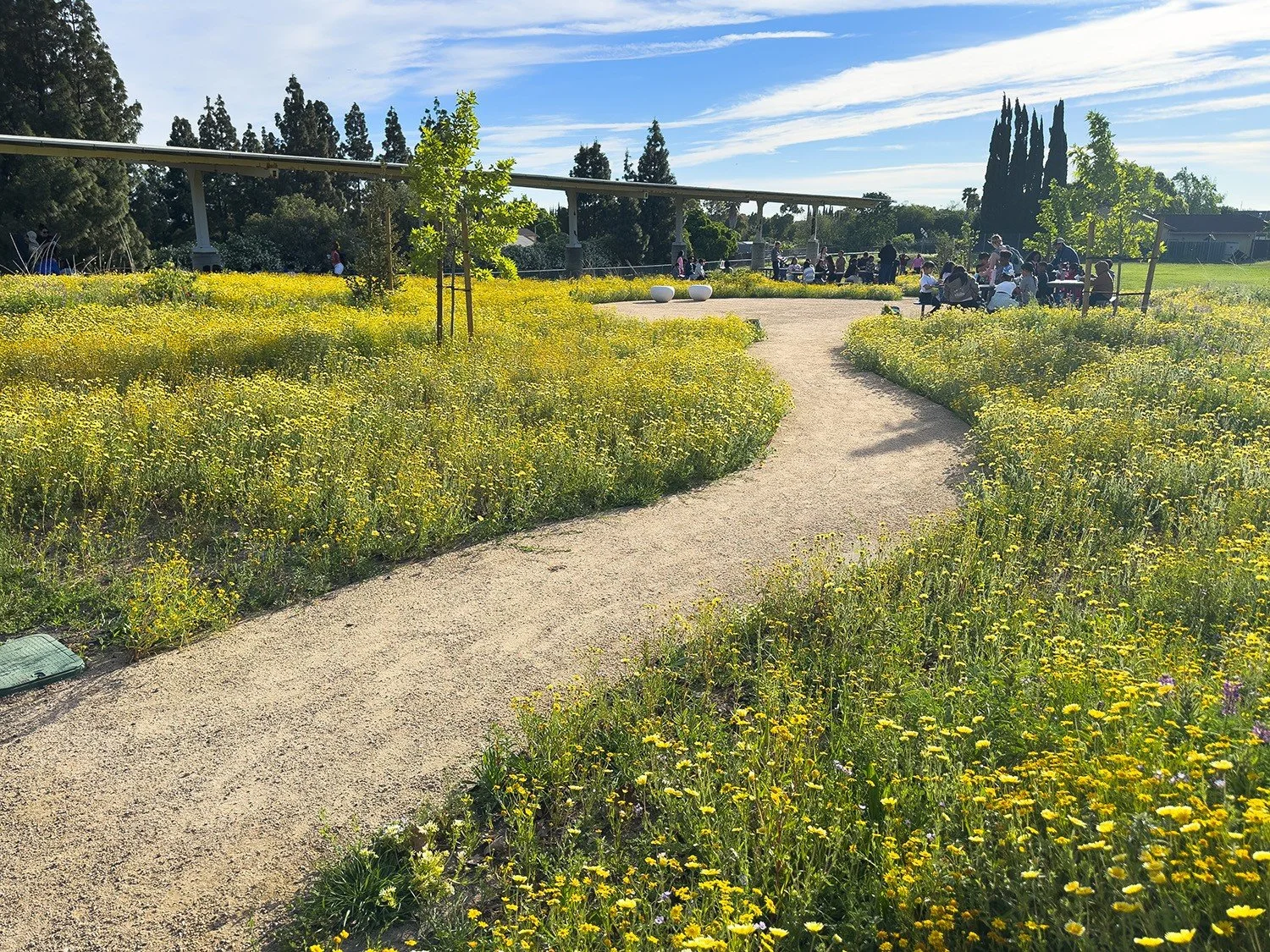
Curving pathways and pollinator-focused planting beds introduce texture and movement into formerly underutilized areas.
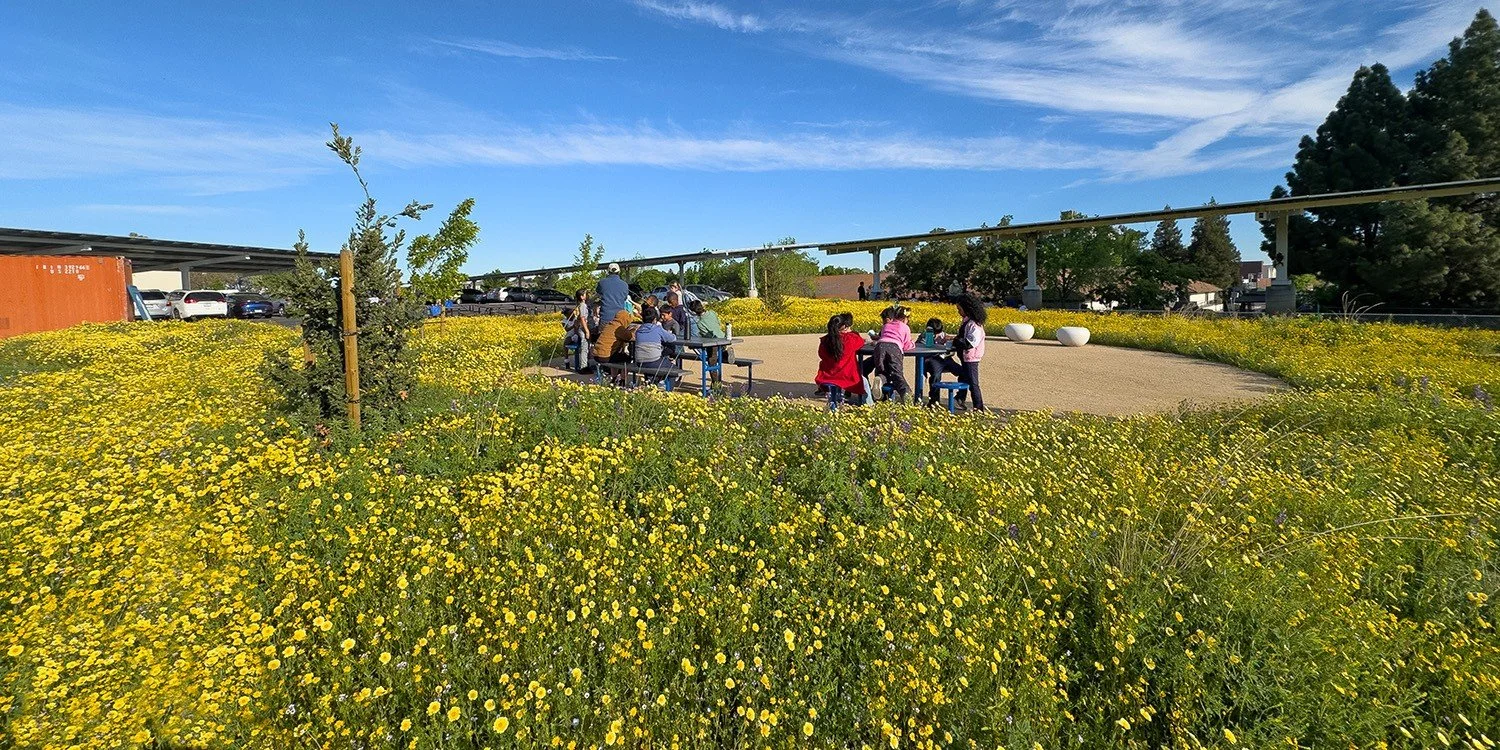
Featuring native grasses and annuals that appear in the surrounding foothills, the outdoor learning area allows students to explore a natural landscape system during the school day.
Additional shade trees and seating areas were added along the blacktop edge to provide summer shelter near the play area.
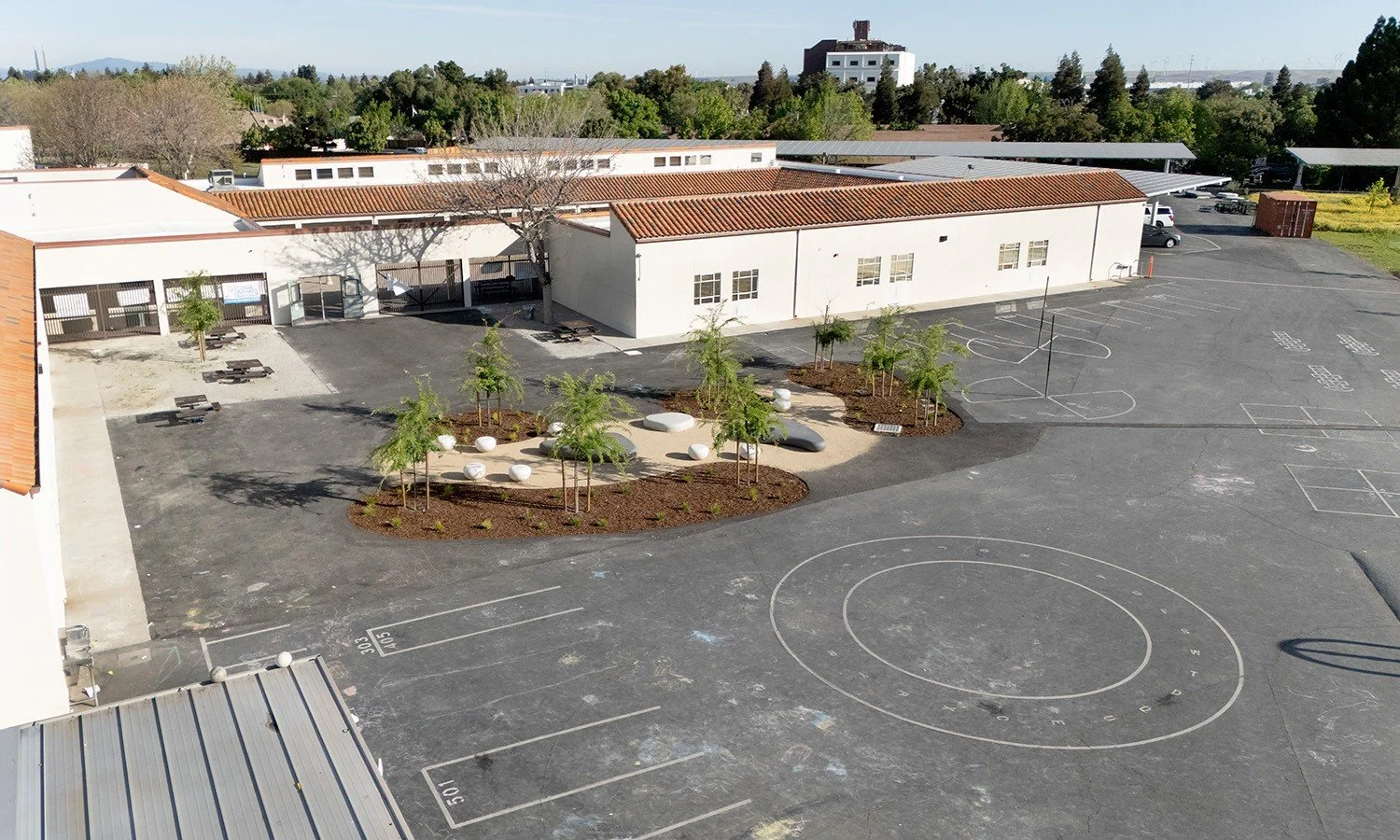
New shade trees and seating areas provide relief from heat in the blacktop area while supporting gathering and everyday student activity.